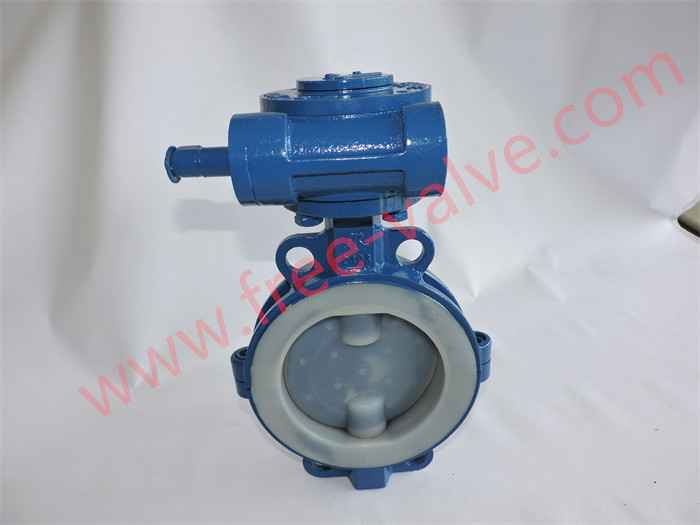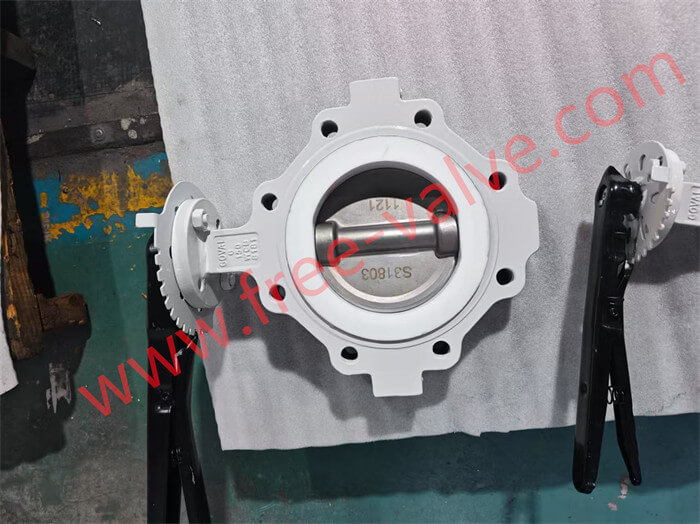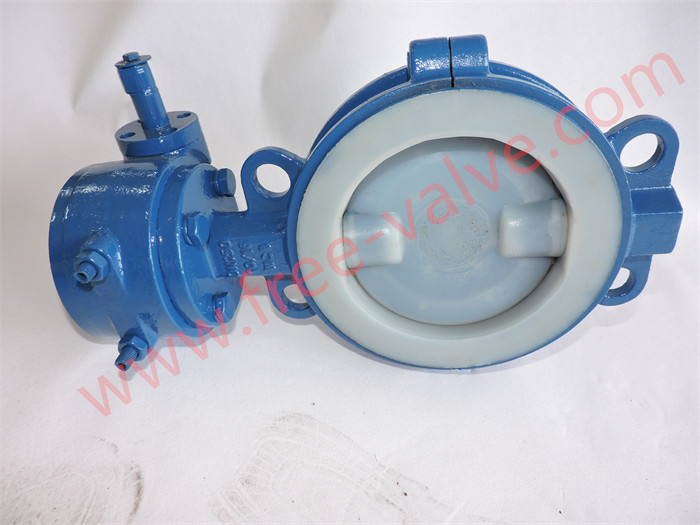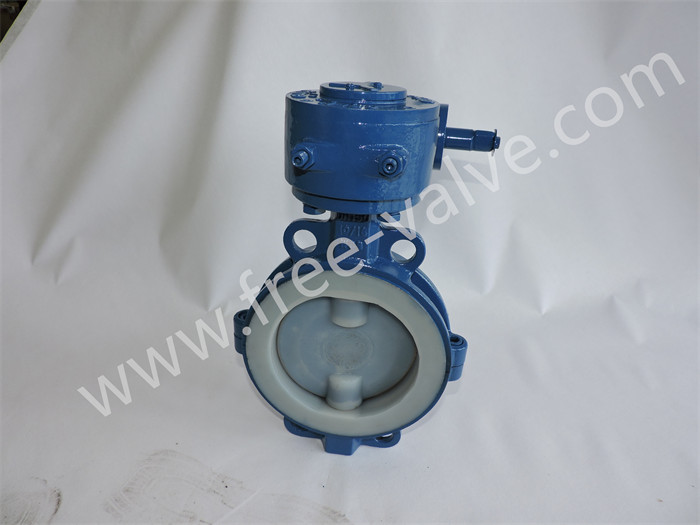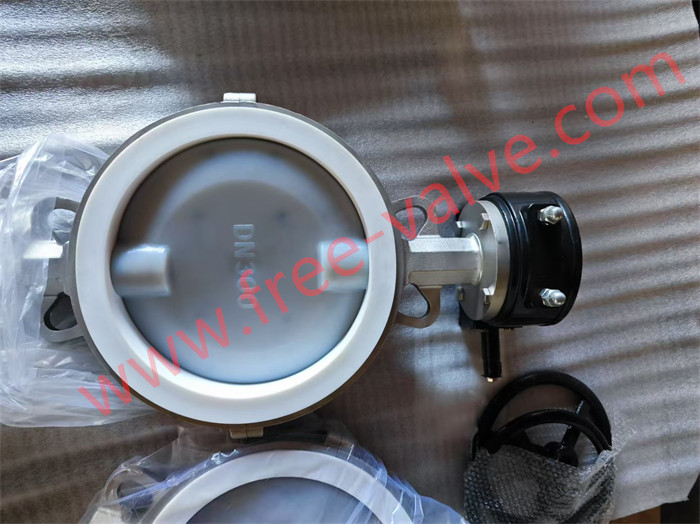


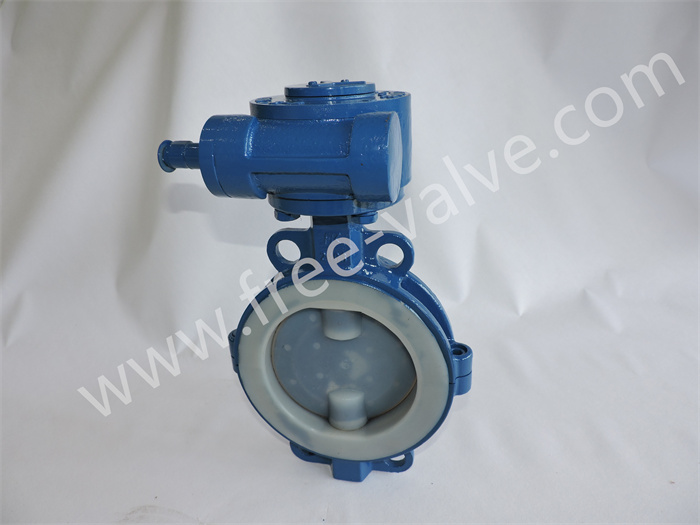
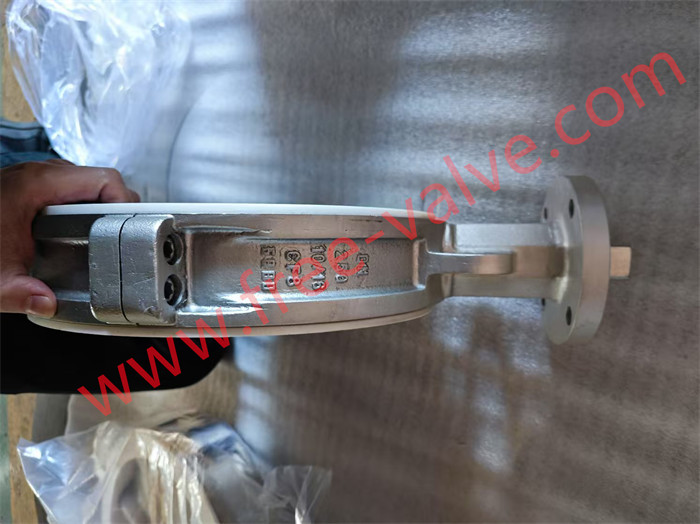
Wafer type fluorine lining Butterfly Valve
FREE-VALVE Fluorine-lined butterfly valves have a nominal pressure of PN10/16 and nominal sizes ranging from DN50 to DN1200. The applicable temperature is determined by evaluating the temperature tolerance of the selected materials (metallic or non-metallic). For example, the operating temperature for steel-lined fluorine (WCB+FEP) materials ranges from-29°C to 150°C, with a maximum limit of 150°C. These valves are suitable for corrosive media such as low-viscosity acids and alkalis, primarily including strong corrosive substances like acids, alkalis, organic solvents, and inorganic solvents. Low viscosity refers to relatively high-concentration granular media, and fluorine-lined valves should avoid use with solid granular media whenever possible.
With the rapid development of the modern petrochemical industry, some media used in special operating conditions are highly corrosive, and even stainless steel valves cannot meet the technical requirements. If Hastelloy or Monel alloys are used as valve materials, due to high content of rare metals such as Ni, Cr, Ti, Mo, and Nb in these materials , resources are limited and costs are high, increasing operation and maintenance expenses on site. With the emergence of new materials, technologies, and processes, the development of industrial valves has been promoted. Early rubber-lined and enamel-lined valves can no longer meet the demands. However,Fluorine exhibit excellent corrosion resistance, wide temperature tolerance, non-stick properties, and good electrical insulation, enabling them to resist corrosion from almost all chemical media(including hydrofluoric acid, concentrated sulfuric acid, and aqua regia). Compared to high-cost noble metal valves such as those made from Hastelloy, titanium alloys, and nickel-based alloys, fluorine are significantly more cost-effective. By leveraging the plasticity of fluoroplastics, a fluorine lining can be applied inside the metal valve body, effectively isolating the metal from direct contact with highly corrosive media. This effectively resolves the issues of low strength and inability to withstand high pressure in fluoroplastic materials. Fluorine-lined valves offer excellent thermal and cold resistance, superior electrical insulation, outstanding chemical stability, resistance to various strong acids, strong alkalis, and strong oxidizing agents, as well as low friction and excellent self-lubricating properties.
Suitable applications
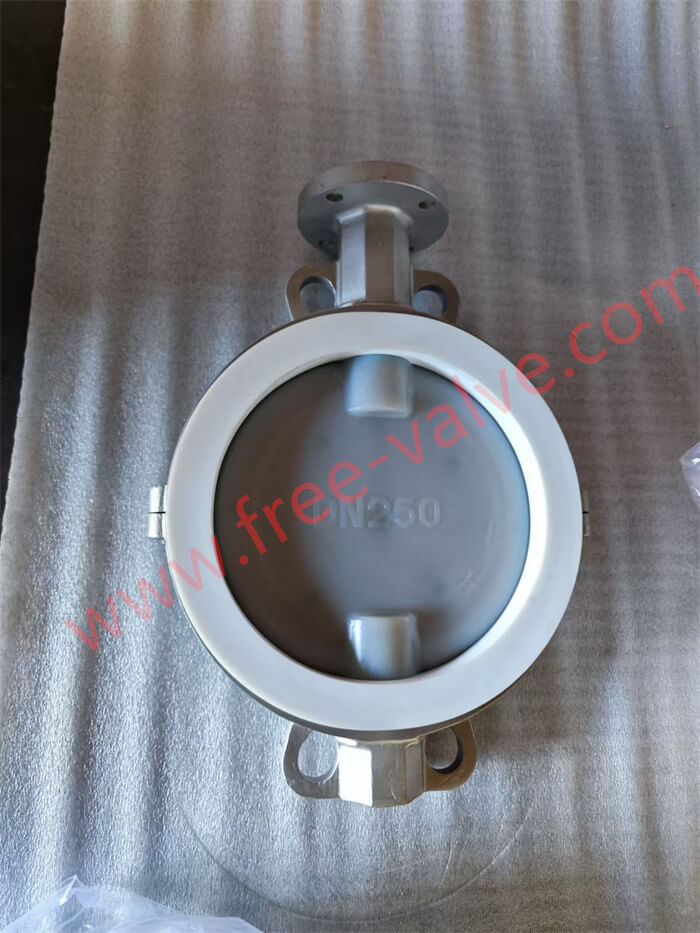
FREE-VALVE Wafer type fluorine lining Butterfly Valve have a nominal pressure of PN10/16 and nominal sizes ranging from DN50 to DN1200. The applicable temperature is determined by evaluating the temperature tolerance of the selected materials (metallic or non-metallic). For example, the operating temperature for steel-lined fluorine (WCB+FEP) materials ranges from-29°C to 150°C, with a maximum limit of 150°C. These valves are suitable for corrosive media such as low-viscosity acids and alkalis, primarily including strong corrosive substances like acids, alkalis, organic solvents, and inorganic solvents. Low viscosity refers to relatively high-concentration granular media, and fluorine-lined valves should avoid use with solid granular media whenever possible.
Butterfly valve disc design
The connection between the valve stem and the butterfly plate must be secure, with a strength sufficient to withstand 75% of the maximum torque applied to the valve stem, ensuring no loosening under normal operating conditions.The butterfly plate should be designed with a streamlined profile to minimize flow resistance and must remain undamaged and deformable under 1.5 times the maximum allowable working pressure differential.
Characteristics and Thickness of Lining Layer
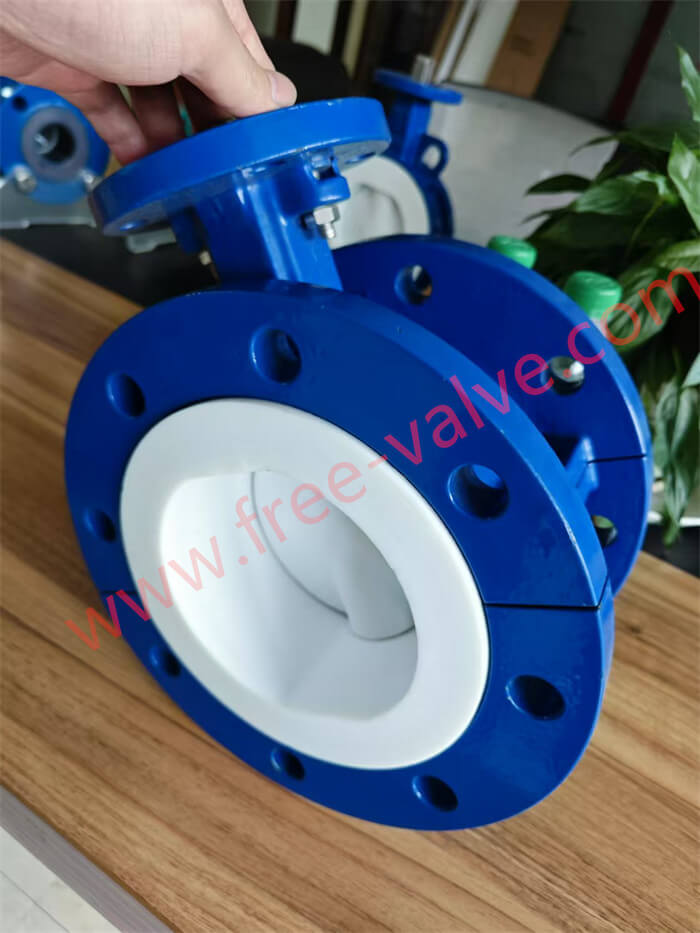
The surface of fluorine-lined valves must be smooth and free from defects such as pores, cracks, or slag inclusions. Flange flanges and other corners should exhibit uniform coloration without whitening. The bonding strength between fluorine and substrate serves as a key quality indicator for the lining. The fluorine- lining layer must adhere to the substrate, with the flange surface fully covered by the lining and incorporating structural features like sandblasting for roughening or machining dovetail grooves to prevent peeling. Under negative pressure conditions of 0.08 MPa, the fluorine- lining layer must not exhibit protrusions.
The thickness of fluorine-lining should be determined under the condition of meeting operational requirements,avoiding excessive fluorine consumption due to overly thick lining. As a polymer material, fluoroplastic exhibits gas absorption properties when exposed to contact gases. As temperature increases, the material expands volumetrically; the linear expansion coefficient of fluoroplastics is approximately 10 times that of metallic materials, leading to increased intermolecular spacing and enhanced gas permeation and absorption. Only by appropriately increasing the thickness can permeation be mitigated. Therefore, in lining design, thickness augmentation is employed to compensate for this inherent limitation. Empirical tests confirm that a lining thickness of δ≥2mm is optimal, with further increases required as valve diameters grow.
Conclusion
FREE-VALVE Wafer type fluorine lining Butterfly Valves resolve the corrosion resistance limitations of conventional valves, significantly savings in rare metals, optimizing resource utilization, lowering production costs, and offering energy-saving and environmentally friendly advantages. They meet the specialized valve requirements of the petrochemical industry, delivering remarkable economic and social benefits. As an innovative evolution of standard butterfly valves, fluoroplastic-lined butterfly valves represent a highly valuable solution for corrosion resistance.