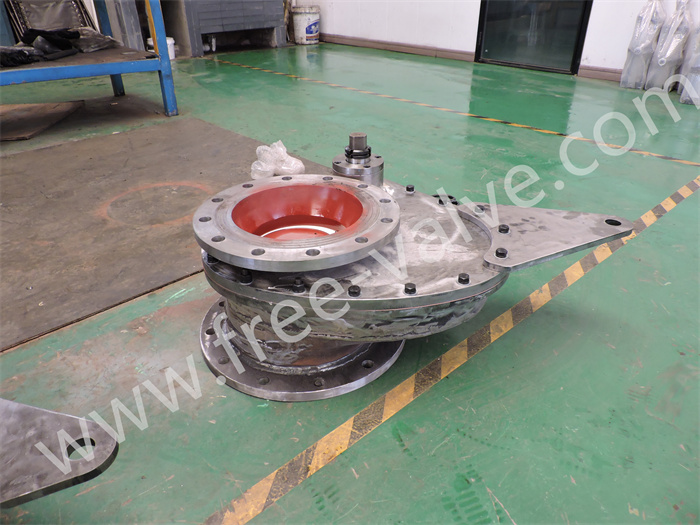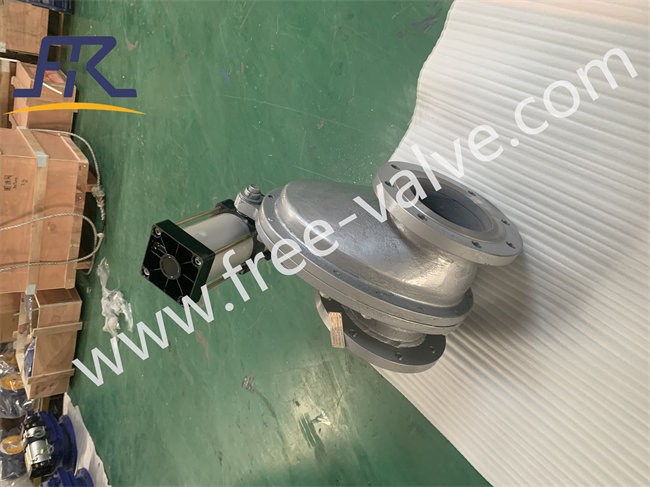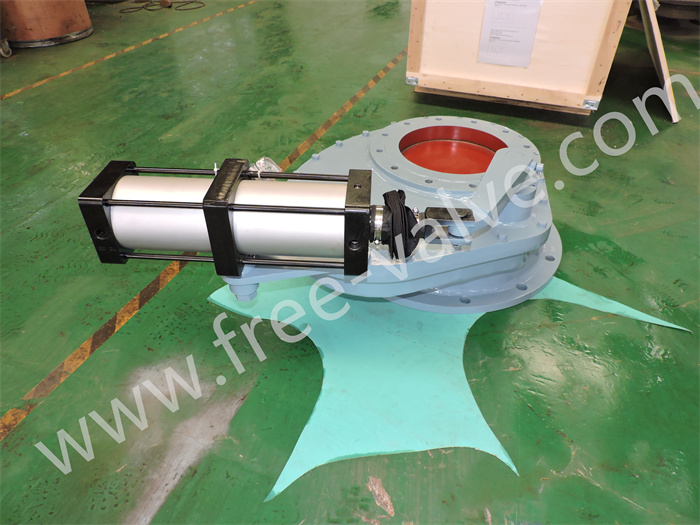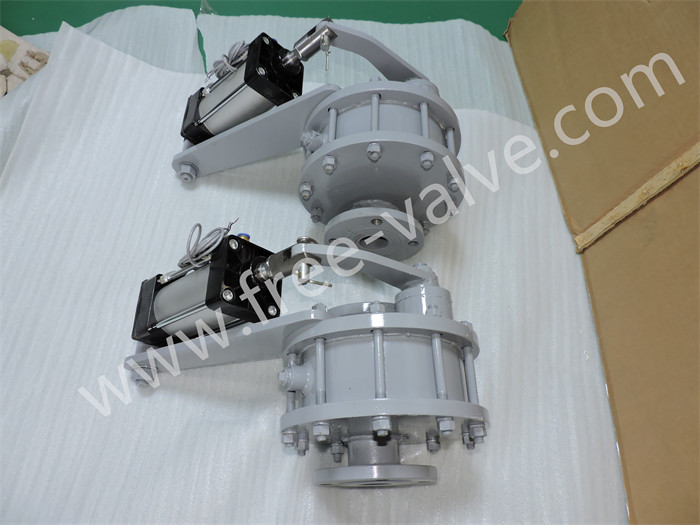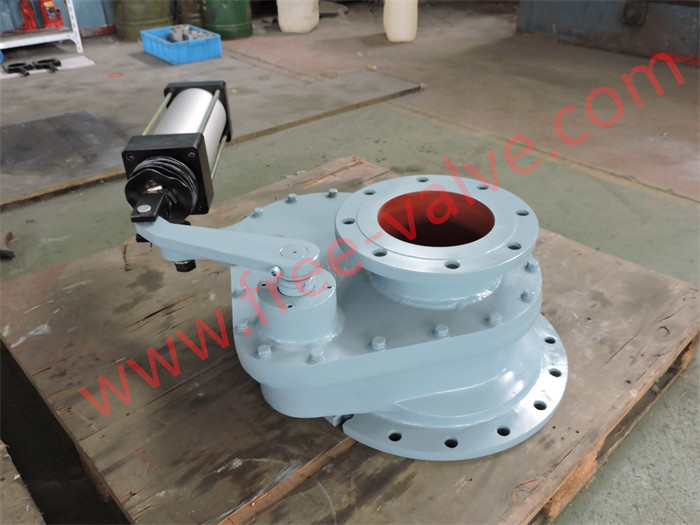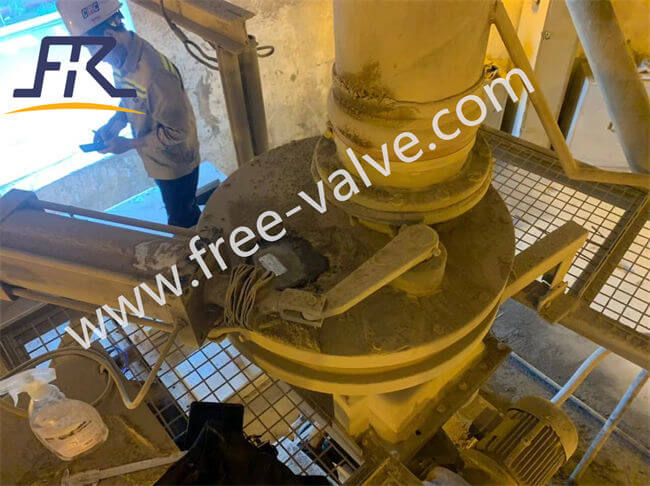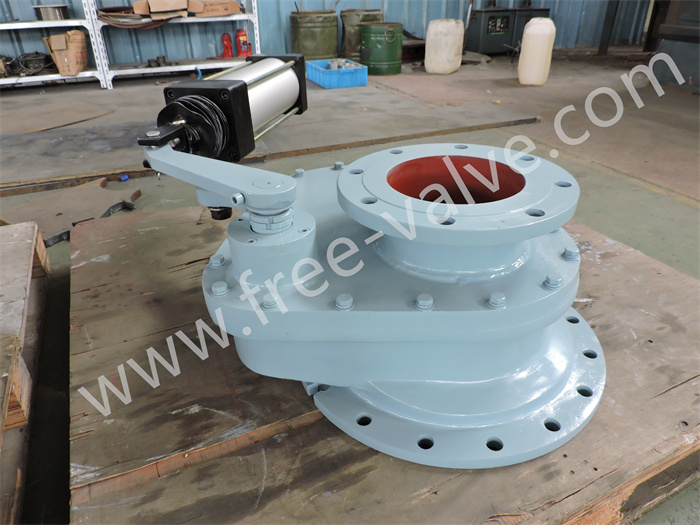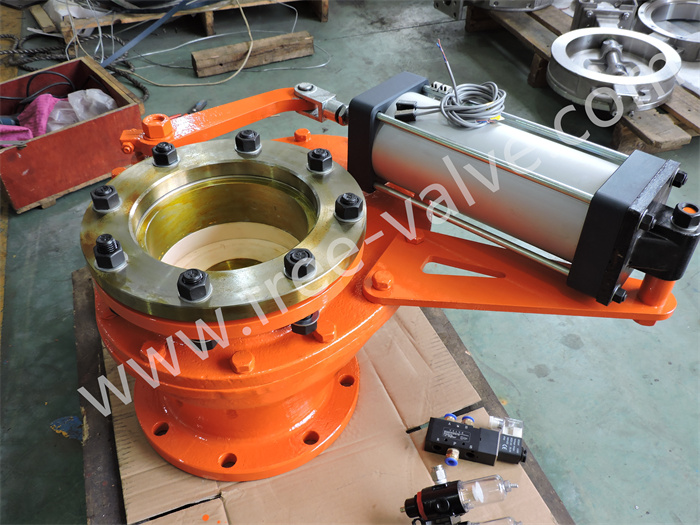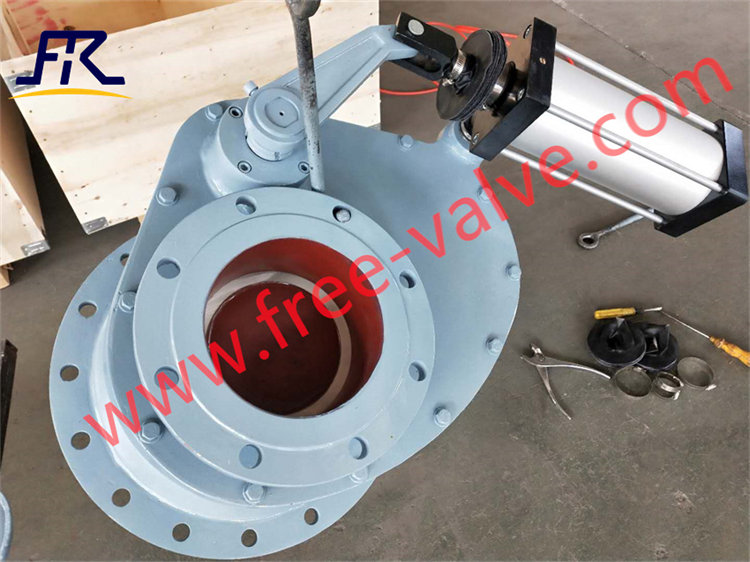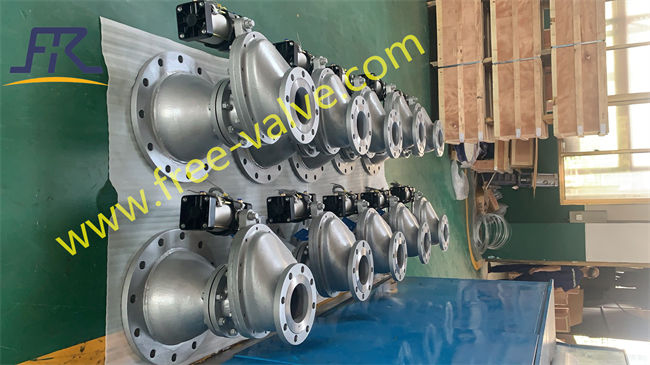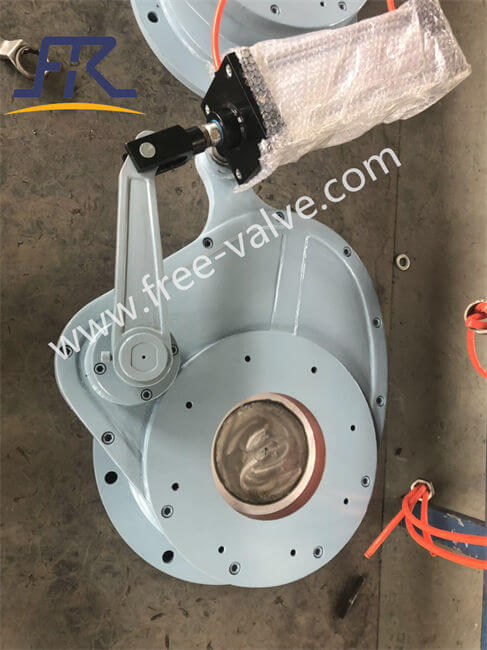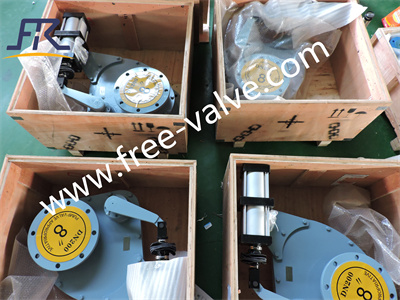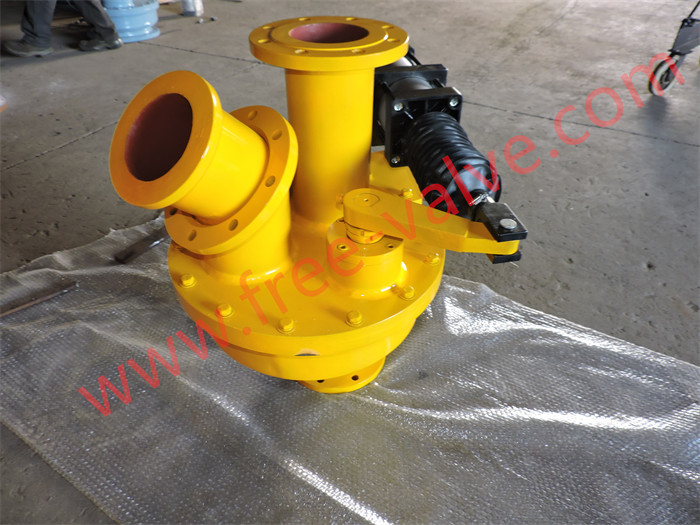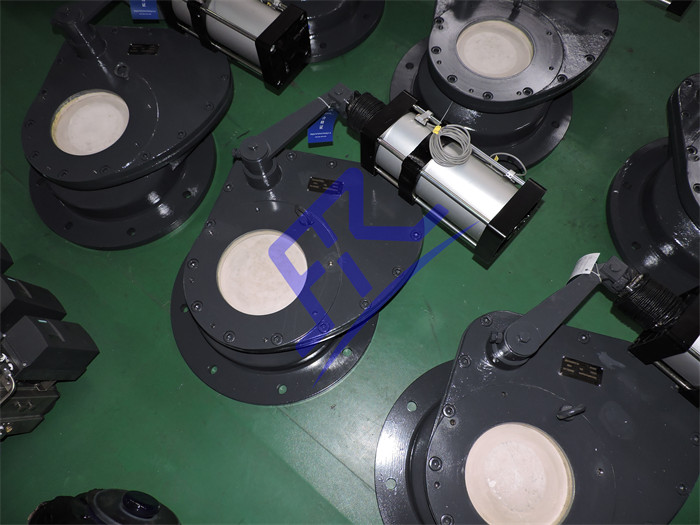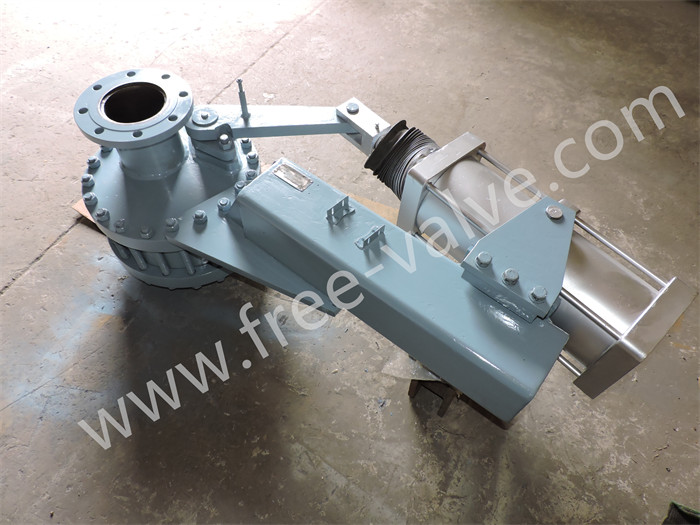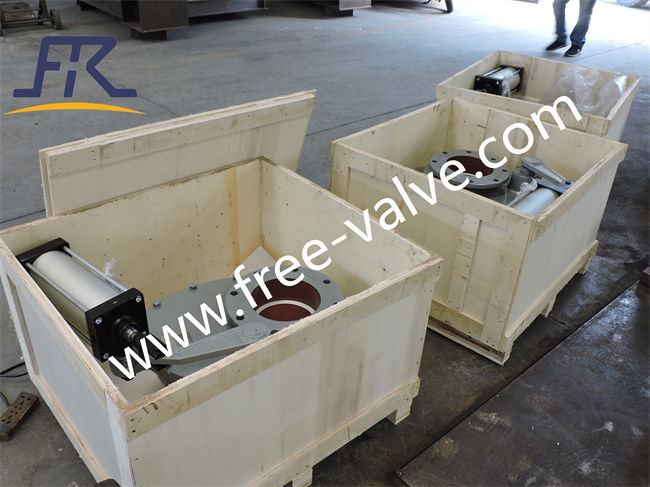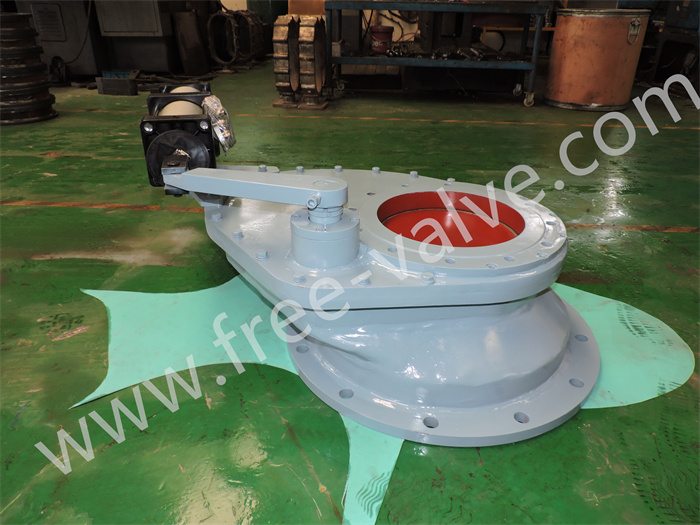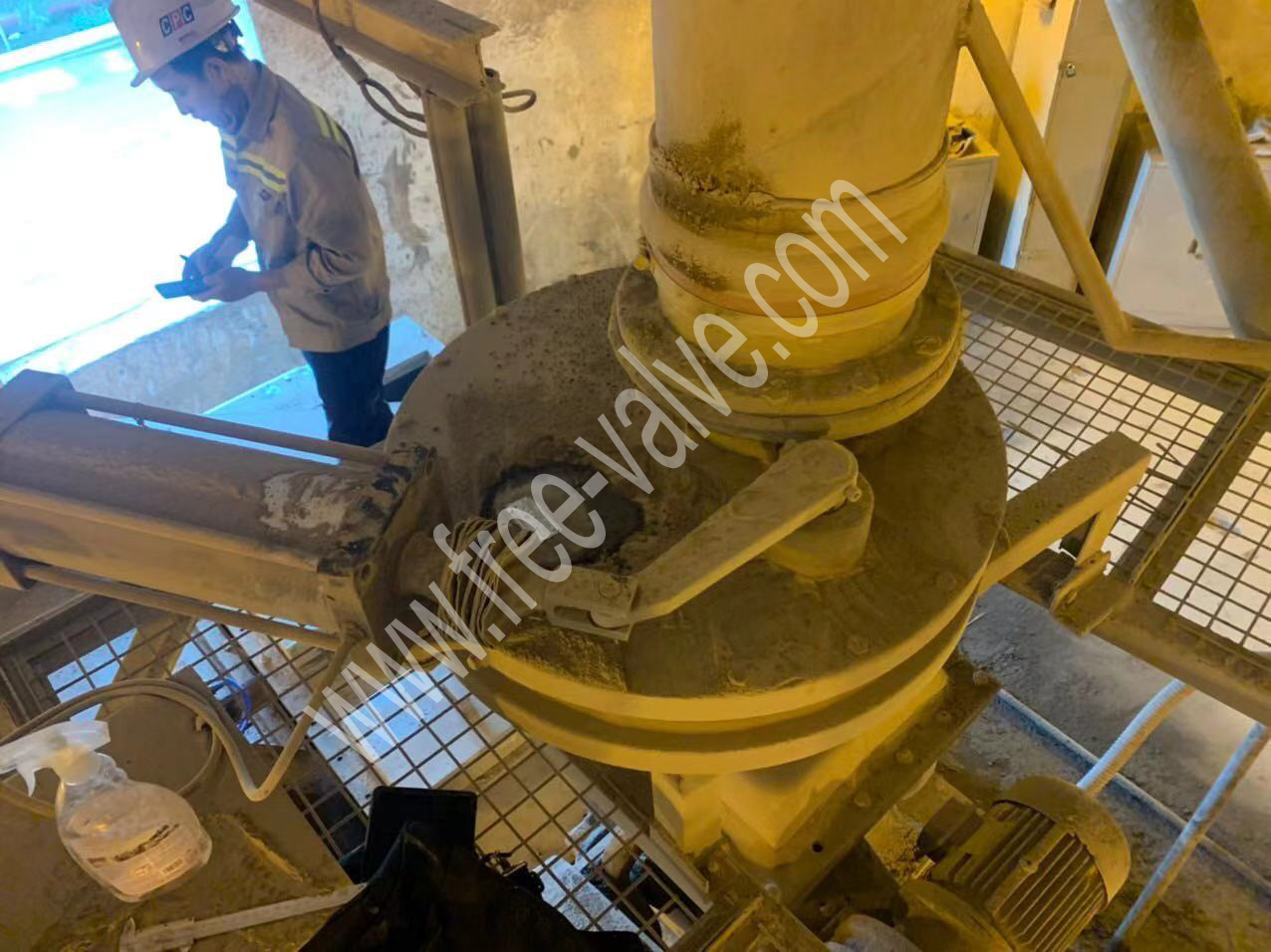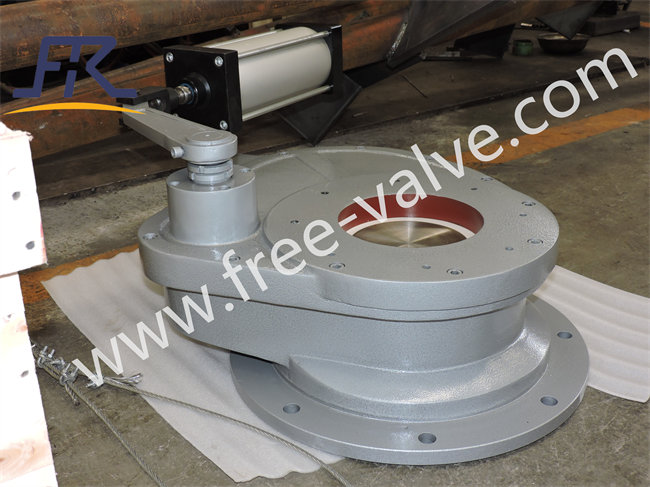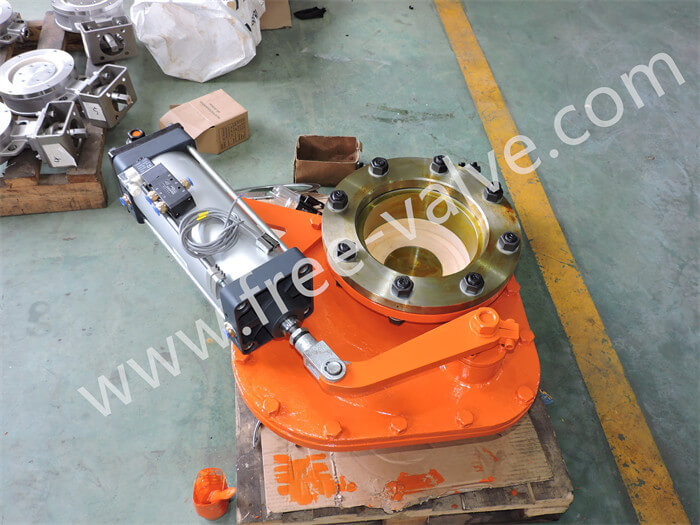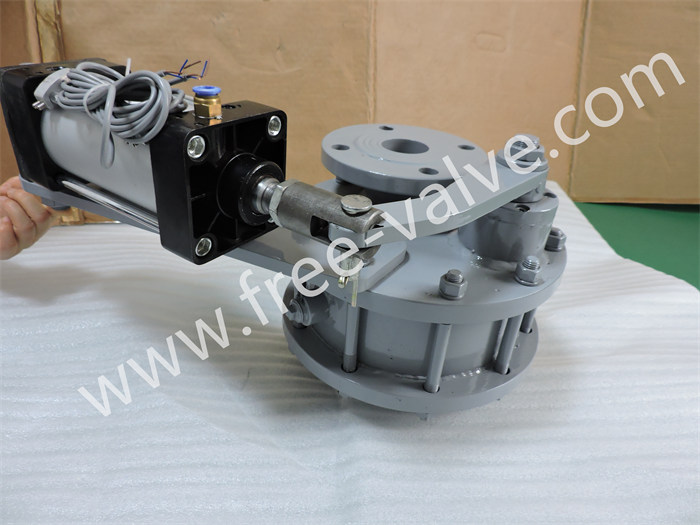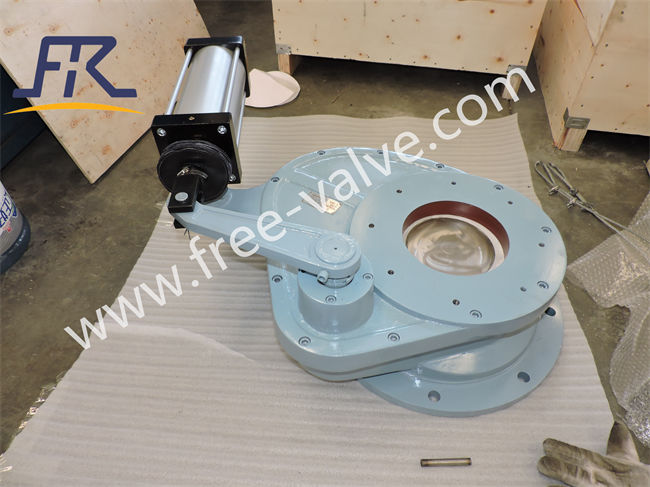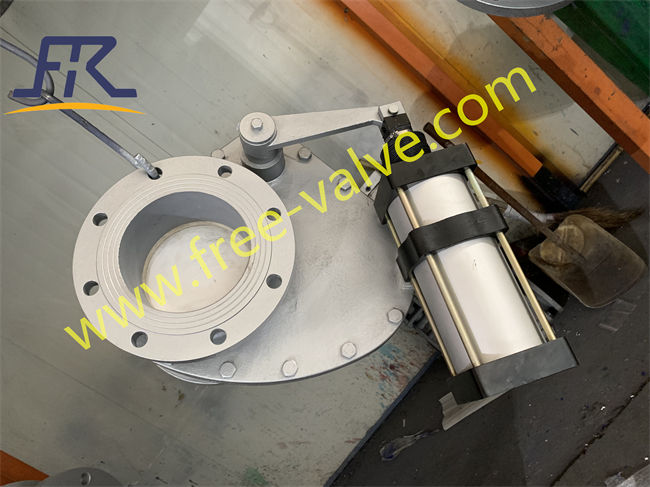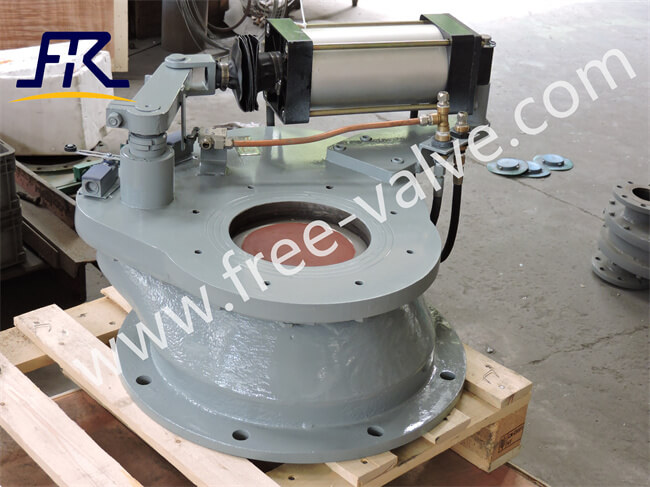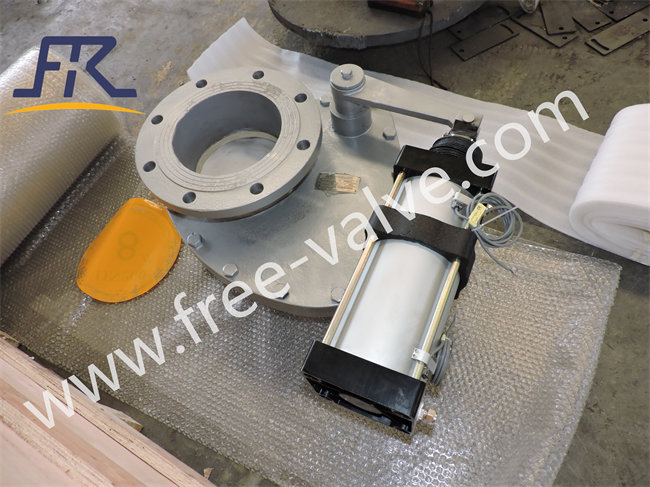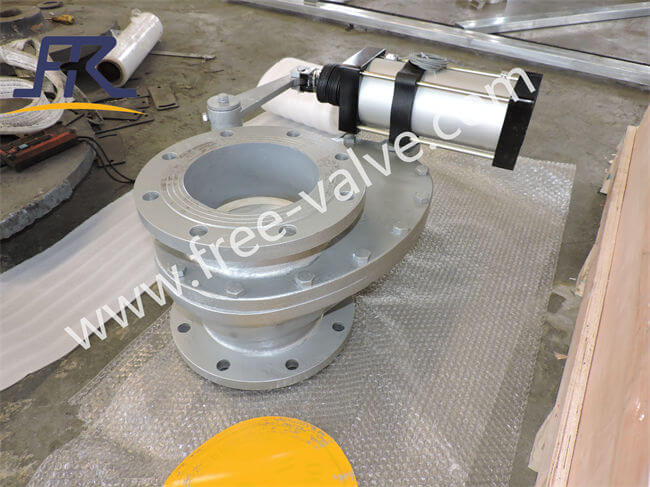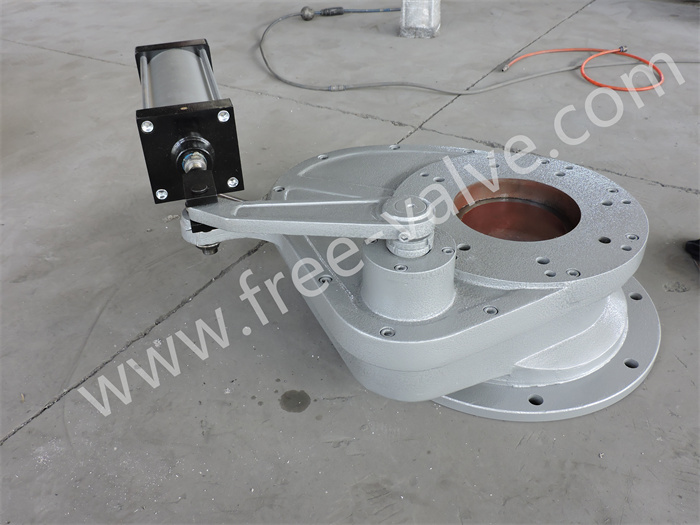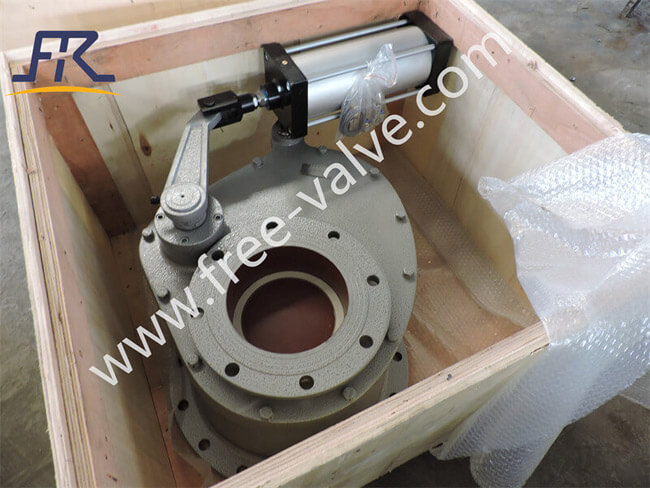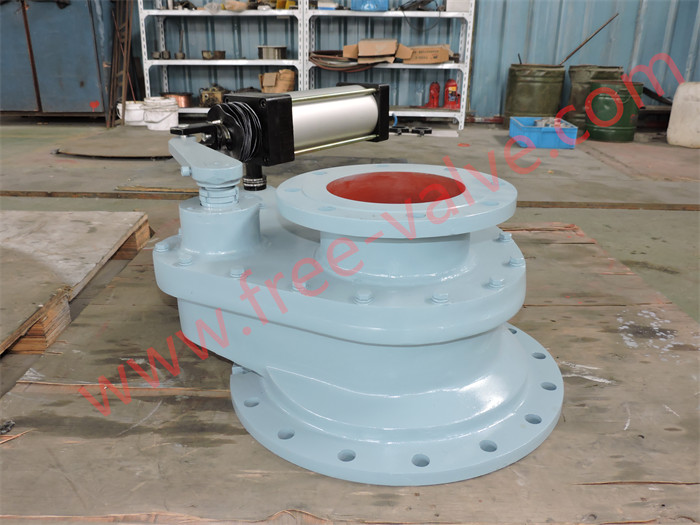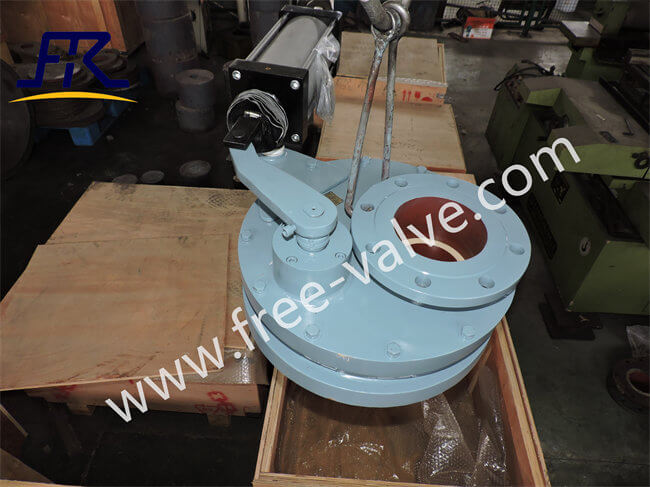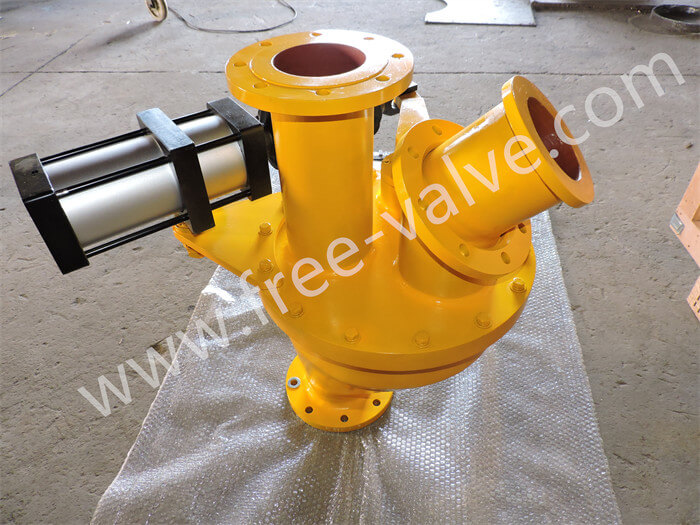
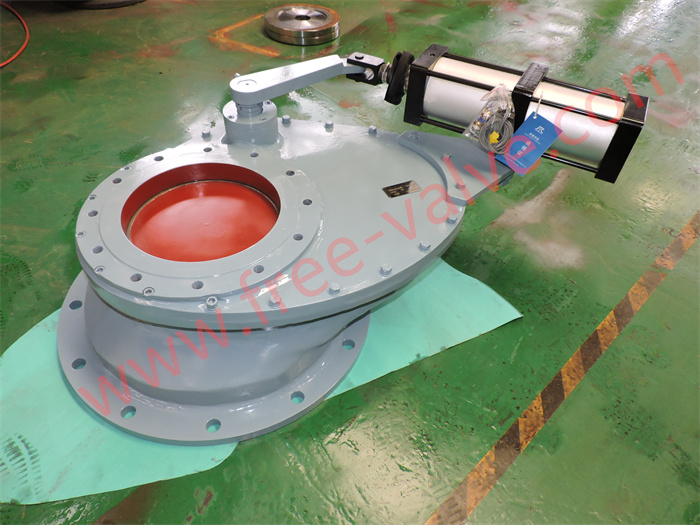
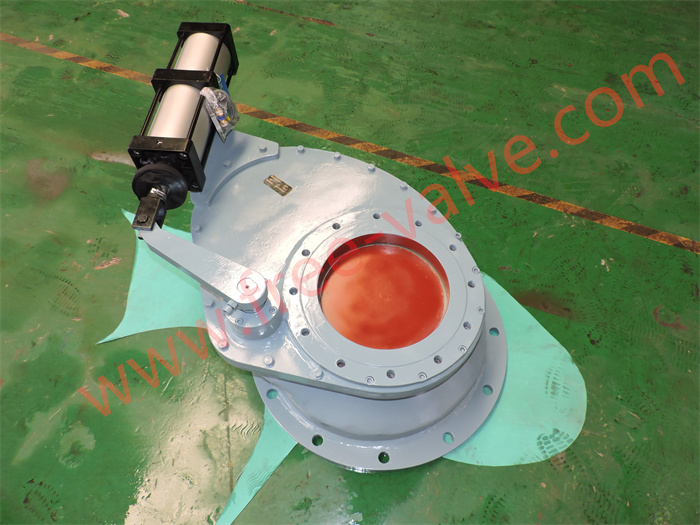
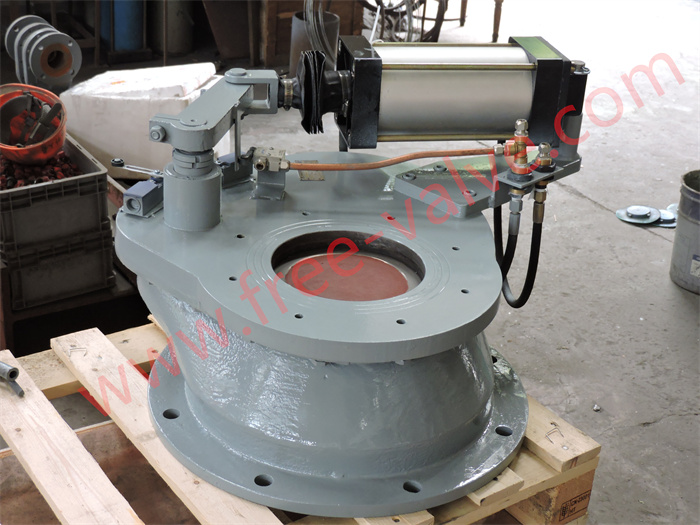
FREE-VALVE rotating disc valve uses the single disc structure with unidirectional sealing. The disc moves through the rotation of the stem, and the valve operates with a rotary motion. The piston rod of the cylinder does not come into direct contact with the medium, reducing corrosion and wear on the piston rod and extending the service life of the cylinder. The sealing pair is made of materials such as hard alloy, ceramic, and tungsten carbide, offering good mechanical properties and wear resistance, resulting in a longer service life.In the thermal power generation pneumatic conveying system, the rotating disc valve is a key component, featuring low ash blockage, minimal ash accumulation, compact structure, and easy installation.
Features
1. The valve disc sealing material is integrally sintered, and the valve seat is hard, offering good resistance to erosion and corrosion. The valve disc with a self-rotating structure not only achieves self-grinding with the valve seat, enhancing the self-cleaning performance of the sealing surface, but also can shear medium during operation, retaining a relatively reliable scraping design, and can continuously meet VI-level sealing requirements during use.
2. The valve disc sealing surface is supplemented by the positive pressure of the spring to ensure that the valve provides sufficient sealing preload within the design-allowed pressure, preventing medium from entering the sealing surface and causing surface damage, which would affect sealing performance.
3. The valve stem features an anti-blowout design, ensuring the reliability of the valve in high-pressure applications. The valve stem and stem sleeve are lubricated with flexible graphite, addressing the issue of excessive opening and closing torque in high-pressure valves, while also ensuring operational safety during use.
4. The internal components of the valve can be designed with special surface treatments according to process requirements. High hardness, wear-resistant materials can be used, or the surface of the internal components can be hardened to improve wear resistance.
5. Select an actuator with a larger output force for the valve to ensure that a small amount of accumulation inside the valve does not affect the normal operation and positioning of the valve.
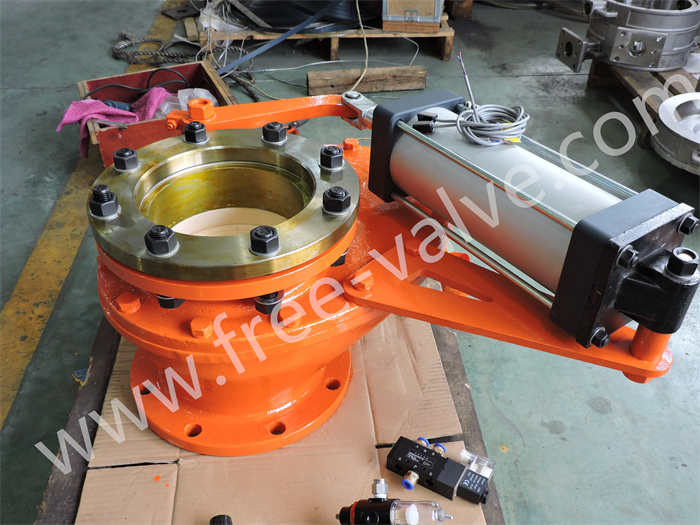
Technical Specification:
1) Size Range: NPS4~NPS12,DN50~DN300
2) Pressure Range: Class 150 /PN6 /PN10
3) Applicable Temperature: 0~200℃
4) Connection Type: Flange
5) Sealing material: Tungsten carbide
6) Pressure test:GB/T13927, API598
7) Face to Face: GB/T12221, ASME B16.10
8) Valve body : GB/T12224,ASME B16.34
Operating Type: Pneumatic
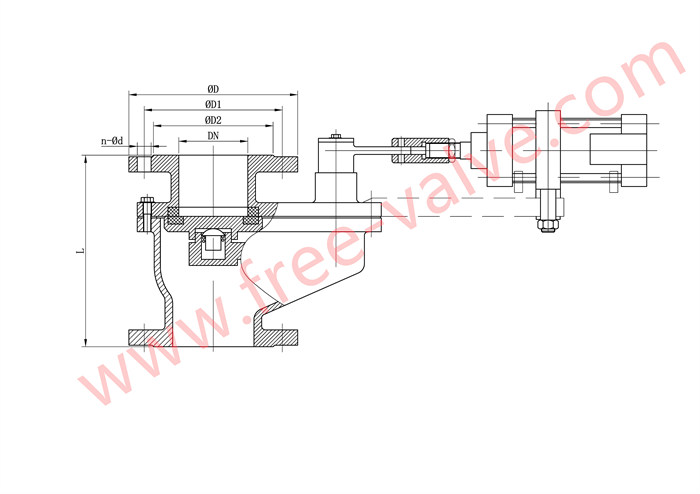
Main outline and connection dimensions
| DN | PN | L | D | D1 | D2 | n-∅d |
| DN125 | PN10 | 265 | 250 | 210 | 186 | 8-∅18 |
| DN150 | PN10 | 265 | 285 | 240 | 210 | 8-∅22 |
| DN200 | PN10 | 305 | 340 | 295 | 266 | 8-∅22 |
| DN250 | PN10 | 340 | 395 | 350 | 320 | 12-∅22 |
| DN300 | PN10 | 340 | 440 | 400 | 370 | 12-∅22 |
Note:Face to Face dimension “L” can be customized according to customer requirements
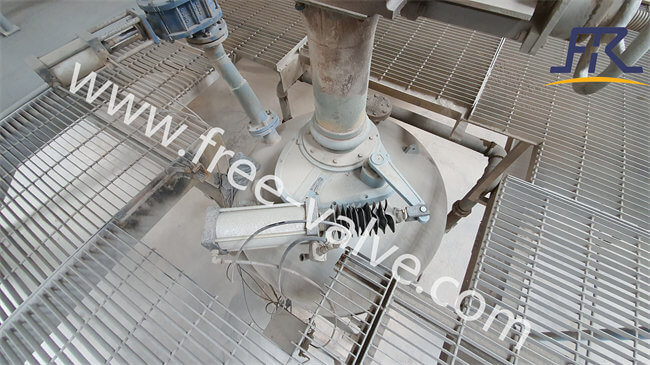
Application:
FREE-VALVE Rotating disc valve is a metal flat hard-seal wear-resistant valve, widely used in harsh conditions with high temperatures, high pressures, high-hardness particulate media, severe wear, and requiring tight shut-off. Rotating disc valves operate flexibly, seal reliably, and have a long service life, making them an ideal replacement for traditional wear-resistant shut-off valves such as metal hard-seal ball valves.